Being cited by AI is not the same as influencing AI.
Academic Research, What We Are Reading
From Citation Selection to Citation Absorption: A Measurement Framework for Generative Engine Optimization Across AI Search Platforms
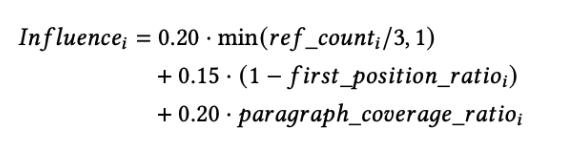
An empirical study of 602 prompts, 21,143 valid search-layer citations, and 23,745 citation-level feature records: ZHANG KAI, HE XINYUE, YAO JINGANGAs we’ve been deploying our Paid Media Solution with publishers we have realized we have to explain difference between an advertiser being cited / visible in AI and an advertisers actually influencing what AI knows and reflects to its users.
So we were super thrilled to find some research proving this because it indicates that our paid media product (and the publishers who use it) are significantly more valuable to advertisers than traditional paid media or AI visibility initiatives.
Research Summary
AI visibility means being found, selected, or cited.
AI penetration means actually shaping what the AI says.
The paper calls these:
- Citation selection: the AI chooses the source and may display it as a citation.
- Citation absorption: the source contributes facts, wording, comparisons, structure, or reasoning to the generated answer.
A publisher article can therefore be visible to AI without meaningfully influencing the answer.
The paper explicitly argues that generative search changes the unit of measurement from search ranking or source appearance to answer participation.
What the paper proves
Citation visibility and answer influence are separate, measurable outcomes.
| Platform | Average citations per prompt | Average influence per fetched citation |
|---|---|---|
| ChatGPT | 6.88 | 0.2713 |
| 12.06 | 0.0584 | |
| Perplexity | 16.35 | 0.0646 |
More citations do not automatically equal more influence. A source can have broad exposure but shallow use, or limited exposure but deep use.
What This Means For Publishers
News publishers, and recognized vertical sites account for roughly 79% to 88% of selected citations across the platforms studied.
A brand publishing the same claim on its own commercial website cannot achieve the same AI influence as it can through a recognized publisher. This is the “Absorption Problem.”
With Paid Media the publisher contributes:
- Recognizability
- Authority
- Topical and geographic context
- Editorial legitimacy
- An environment generative engines already use as a source class.
What This Means For Publishers:
- Publishers Can Use Intelligent Attribution To Solve Advertiser’s Absorption Problem
- Measurement Needs To Go Beyond Visibility
Our Paid Media solution allows publishers to structure paid publisher content so it contains the facts and decision logic that an AI needs in order to answer commercially meaningful questions.
Visibility measures whether the content entered the answer environment. Penetration measures whether the information entered the answer.
What Makes Intelligent Attribution Different
Most GEO vendors focus primarily on making existing brand-owned pages easier for AI systems to find. Most paid media focuses on distribution, credibility, impressions, and human reach.
Intelligent Attribution connects the two:
- Publisher authority gets the information into the candidate pool.
- Intelligent Attribution Evidence Engineering gives the information a chance to shape the generated answer.
How Intelligent Attribution Approaches AI Penetration
At Intelligent Attribution, we start by identifying paid media placements and breaking every article down into individual claims. Not every claim is automatically a fact. A claim is something an advertiser wants AI to understand; a fact is something AI can confidently rely on.
We then identify which claims can be empirically supported using structured evidence, trusted sources, and knowledge graph signals. The more claims we can transform into verifiable facts, the more likely they are to become part of what AI understands—not just something it cites.
That’s the distinction this research helps explain. AI visibility is about whether content is found. AI penetration is about whether the information itself becomes part of the generated answer. Our goal is to help publishers deliver both.

Leave a Reply